What these cards actually are
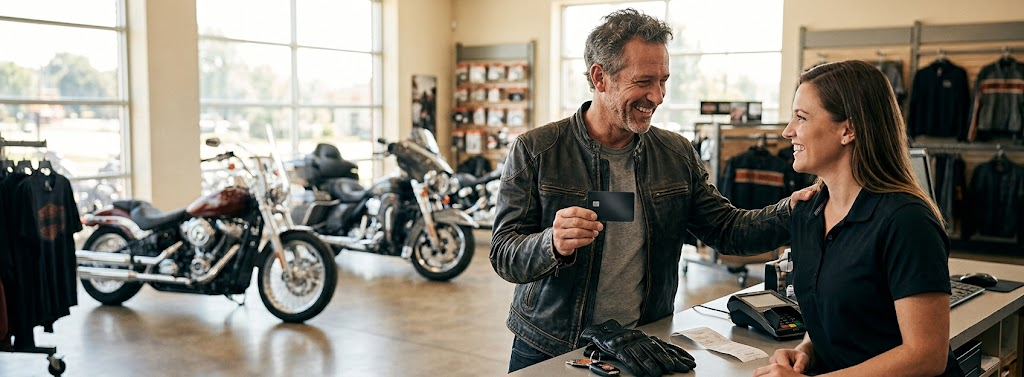
When you see a credit card branded with a motorcycle company logo, you are looking at a co-branded card. These cards are essentially partnerships between a retail brand and a bank. The bank handles the money and the lending, while the brand provides the perks that appeal to their fans, like points toward gear or service visits. They work like any other card in your wallet, but the rewards are often tucked into a niche ecosystem.
How the mechanics work
Most of these cards function on a points system. You swipe, you earn points, and you redeem those points for specific things, usually items sold at a dealership. It is a closed loop. If you rarely visit a dealership or don't need parts, the value of those points drops significantly compared to the flexibility you might find with general cash-back cards. You are essentially prepaying for future hobby-related costs.
Understanding the costs
The cost of carrying these cards is dictated by the annual percentage rate (APR), which is the yearly interest cost you pay if you do not clear your balance in full every month. Because these are often rewards-heavy, the APR can be on the higher side. If you carry a balance, that interest will quickly wipe out any value you earned from your points. If you are struggling to pay off debt, you might be better off looking into loans with fixed terms or balance transfer cards to get your finances under control before picking up a retail-branded card.
Watching the fine print
Another thing to consider is the annual percentage yield (APY), which is the real rate of return you get on your money in a savings account. While this applies to your banking & savings rather than your credit card, comparing the two helps. If you are paying high interest on a card but earning almost nothing on your savings, you are moving money in the wrong direction. We suggest you keep your debt low and prioritize your emergency fund before chasing brand-specific rewards.
Comparing your options
Before you commit to a card tied to a single brand, look at the bigger picture. Are you going to spend enough at that specific retailer to justify a card that might not offer much elsewhere? If you want more freedom, look at travel rewards cards if you are a frequent flyer, or no annual fee cards if you want to keep your costs strictly predictable. If you are a fan of the brand but want to build your credit score, make sure the card reports to credit bureaus and that you pay it off every single month.
Common traps to avoid
- The dealership lure: Sales teams might push these cards to help you finance a purchase. Be careful, as the credit terms on a retail card are often different from the terms you would get through standard loans.
- Ignoring the overhead: Some cards carry a yearly membership fee. If you aren't spending enough to earn rewards that exceed that fee, you are paying the bank just to hold the card.
- Mixing personal and work: If you are using your bike for work, consider business cards instead to keep your taxes and expenses separate.
- Lifestyle creep: Just because a card offers points for motorcycle gear doesn't mean you should buy gear you don't need. Rewards are only a benefit if you were going to buy the item anyway.
We always tell people to take a step back and look at their whole financial life. If you are currently worried about mortgages, investing for your future, or managing your insurance premiums, adding a niche credit card might just be one more thing to track that doesn't actually improve your financial position.