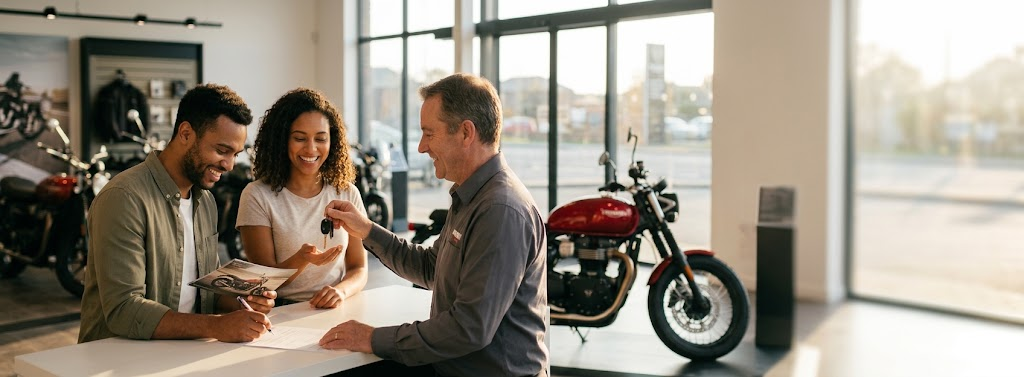
Getting on Two Wheels Without Breaking the Bank
You found the bike you want. Now you just need to figure out how to pay for it without emptying your savings. A motorcycle loan is simply borrowed money you pay back over time, plus interest, to buy a bike. Lenders hold the title until you make the final payment, meaning they can repossess the motorcycle if you fall too far behind.
Financing a bike feels a lot like getting an auto loan for a car, but lenders often view motorcycles as toys rather than necessities. Because of that, the rules can be a bit different. You might face higher interest rates or need a bigger down payment than you would for a standard car purchase.
How Motorcycle Financing Actually Works
When you take out a loan, you agree to a set monthly payment for a specific number of months, usually ranging from two to six years. Every payment splits into two parts: principal, which pays down the actual cost of the bike, and interest, which is the cost of borrowing the money. Your annual percentage rate (APR), the true yearly cost of borrowing expressed as a percentage that includes both interest and mandatory fees, dictates how much extra you will pay over the life of the loan.
Before you start shopping, it helps to look at your broader financial picture. If you already carry a heavy load of student loans or a large mortgage, lenders might be tighter with their wallet. On the flip side, keeping your banking & savings accounts looking healthy shows the lender you can handle a new monthly bill without sweating it.
What Decides What Your Loan Costs
Lenders do not guess what to charge you. They look at a few specific moving parts to decide your risk level and set your price.
- Your credit score: A higher score means a lower cost to borrow. If your credit is messy, you might need to lean on a clean history with credit cards to show you pay on time.
- The down payment: Putting cash down upfront lowers the total amount you need to borrow, which can convince a hesitant lender to give you better terms.
- Loan term length: Longer terms mean lower monthly payments, but you pay way more total interest over the years.
- Age and type of the bike: Brand new cruisers often qualify for better terms than old, high-mileage sportbikes because they are easier to repossess and sell if things go south.
Where to Shop for a Loan
Never walk into a motorcycle dealership and accept their first financing offer without checking around first. Dealerships often tack on extra margin to the financing terms they hand you. Instead, check with local credit unions and online lenders to get pre-approved before you shop. Pre-approval gives you a baseline offer in your pocket, and it might even help you qualify for better deals elsewhere, much like setting up a smart investing strategy where you shop around for the lowest fees.
Sometimes, if your credit is not quite where it needs to be, a lender might suggest a personal loans option instead of a traditional vehicle lien. Personal loans are unsecured, meaning they are not tied to the bike itself, but they usually come with higher costs because the lender takes on more risk.
The Traps to Watch Out For
Financing a motorcycle comes with a few classic traps that catch buyers off guard every single season.
The biggest trap is focusing only on the monthly payment. A dealer can stretch a loan out to seven years to make the monthly payment look tiny, but you will end up paying thousands of dollars in extra interest. You might even end up upside down on the loan, meaning you owe more than the bike is actually worth.
Another trap is forgetting about the hidden costs of riding. Before you sign, make sure you factor in the cost of proper gear, registration, maintenance, and insurance. Just as you want to understand the annual percentage yield (APY), the yearly return on money you keep in a deposit account including compound interest, you need to know the exact total cost of ownership before you ride off the lot.