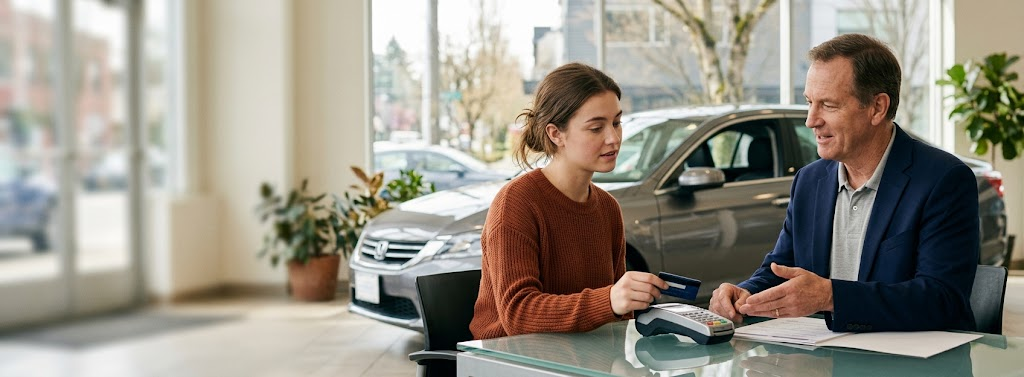
Can you actually buy a car with a card?
Technically, yes. Practically, it is complicated and usually expensive. Dealerships rarely let you charge the full price of a vehicle because card processing fees cut deeply into their profit margins. You might manage to put a down payment on a card, but buying the whole car that way is another story.
When we look at how to build a solid financial foundation, using plastic for everyday purchases makes sense if you pay the balance off immediately. But a car is a massive purchase. Before you hand over a card, you need to understand how the dealership handles transaction limits, processing fees, and whether this move helps or hurts your credit.
How dealership card payments work
Most dealerships cap the amount you can charge on a card. That cap usually sits between two thousand and five thousand dollars. If you want to put the whole car on the card, the dealer will likely pass the merchant processing fee straight to you. That fee usually hovers around two to three percent of the total charge.
On a twenty-thousand-dollar car, a three percent fee adds six hundred dollars to your cost instantly. Unless your rewards haul is worth more than that fee, you are paying extra for nothing. If you are focused on building your credit profile, you might already look at cards for building credit to manage smaller monthly bills. Swiping a massive car purchase rarely helps your score in a meaningful way, and high credit utilization can actually drop your score temporarily.
The math behind card costs
If you do not pay your statement balance in full when the bill arrives, interest kicks in fast. The annual percentage rate (APR), which is the yearly cost of borrowing money expressed as a percentage, on standard cards is usually much higher than a standard car loan. If you carry a balance, that car gets very expensive very quickly.
Compare that cost to taking out a traditional vehicle loan, or using funds from your Banking & Savings account if you have cash set aside. If you are comparing financing options, always look at the total cost over the life of the debt rather than just the monthly payment. Sometimes people try to juggle debts by moving balances around using Balance transfer cards, but those usually come with their own transfer fees and do not solve the root problem of a large, high-interest balance.
What to compare before you swipe
If the dealer allows a card payment for part of the price, run the numbers first. Compare the rewards you might earn against the fees the dealer charges. If you use Cash-back cards, calculate if the cash back beats the transaction fee. Spoiler alert: it rarely does.
You should also think about your wider financial picture. How does this fit alongside other big milestones like applying for Mortgages or taking out other types of Loans? Messing with your credit utilization right before applying for a home loan can cost you a better rate. Also, make sure you have proper Insurance lined up before you drive off the lot, as lenders and dealers require coverage from day one.
Some entrepreneurs try to use Business cards for vehicle purchases to keep personal and commercial expenses separate. While that helps with bookkeeping, the fee problem and the high interest rates still apply unless you pay the bill immediately. And if you are tempted to pull money from your Investing accounts to avoid financing altogether, weigh the lost market gains against the cost of a modest loan.
Common traps to avoid
The biggest trap is assuming rewards will offset the cost. If a card offers points or miles, a massive purchase can feel like a great way to rack them up. But if you trigger a high interest charge or pay a steep dealer fee, you just bought those points at a terrible price.
Another trap is hurting your credit score right when you need it most. Maxing out a card for a car down payment spikes your credit utilization ratio, which is the amount of credit you are using compared to your total limit. A high ratio signals risk to lenders. If you need No annual fee cards just to keep your wallet lean, piling a massive car balance on top defeats the purpose of keeping your overhead low.