0% intro APR for 15 months on purchases and b… Discover it® Cash Back Calculators How we make money
VOATLAS
How to Afford a $310K Short-Term Rental Before Summer

How to · Property

How to Afford a $310K Short-Term Rental Before Summer

A plain plan to fund a $310K short-term rental with a 15-month intro window, before the summer booking rush.

Typical price $310,000 before closing costs
Deposit at 5% $15,500 what you need saved

How we got that: 5% of $310,000. Plenty of loans go lower — 3% on a conventional, 3.5% on an FHA, nothing down on a VA — and plenty of buyers put more in to shrink the monthly payment. Closing costs land on top, usually another 2–5%. Your actual rate and payment depend on the lender, your credit and the day you lock.

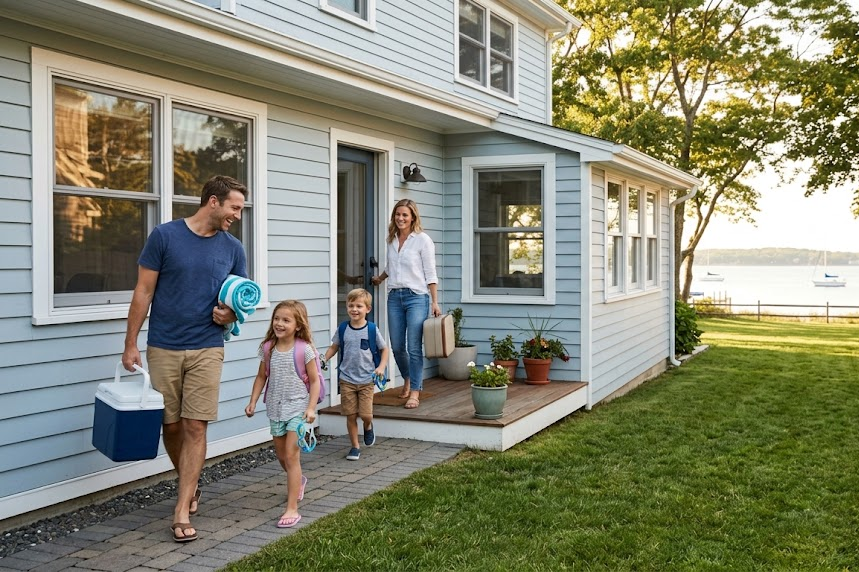
The place is a short-term rental, which means it's less a home you'll live in every day and more a unit built around the rhythm of guests: weekend skiers, summer beach crowds, a few work-from-anywhere weeks in between. Shoulder season is the smart window to close, before summer demand pushes competing buyers off the fence. Whoever lives nearby or stays a lot will care about the street, the parking, and whether the layout can host four without feeling cramped.

Now the money. With a typical US price around $310,000, you're looking at a real down payment, real closing costs, and a monthly payment that includes more than just principal and interest. Property tax, insurance, utilities, furnishings, and platform fees all sit on top of the loan. A short-term rental can offset some of that, but only if the local market actually supports the nightly rate you need, so treat any rent projection as something to verify, not assume.

Heads up on the 15-month intro APR: it is a deadline, not free money. If the balance is still on the card when the window closes, the remaining amount starts earning interest at the regular APR, which is usually well above what a mortgage costs. Pay it off or move it before month 15, and the card worked exactly as planned.

The steps

  1. 01

    Map the down payment and closing costs

    Plan on 15% to 25% down on a $310,000 property, so somewhere between $46,500 and $77,500 in cash before you sign anything. Closing costs usually run 2% to 5% of the price, another $6,200 to $15,500. Add inspections, appraisal, and any repairs the inspector finds, and the all-in cash you need is meaningfully higher than the down payment alone.

  2. 02

    Get the real monthly number

    Take $310,000 and divide it across 15 months and you get roughly $20,667 a month, before interest. That's the loan portion only. Once you add property tax, homeowners insurance, HOA if there is one, utilities, internet, and a reserve for repairs, the actual monthly outflow is higher. Underwrite the unit against that bigger number, not the headline one.

  3. 03

    Stress-test the rent you can realistically book

    Pull the last 12 months of nightly rates and occupancy for comparable units in the same neighborhood, not the zip code over. Build a base case at 50% to 60% occupancy and a downside case 20 points lower. If the downside case still covers the full monthly cost including taxes and insurance, the deal survives bad summers. If it doesn't, the property is too expensive or too far from demand.

  4. 04

    Use the Discover it Cash Back intro window on purchases

    The Discover it Cash Back card runs a 0% intro APR for 15 months on purchases, so any charges you put on it during that window don't accrue interest as long as you pay the statement minimum and clear the balance before month 15. Furniture, supplies, closing-cost line items you can put on the card, and even a portion of the down payment if your lender allows card funds at closing, all become interest-free float for up to 15 months. This is a timing tool for cash flow, not a discount on the price.

  5. 05

    Build a payoff plan before month 15

    Set a calendar reminder for month 14, not month 15. Have the balance paid off, or transferred, before the intro period ends, because any leftover balance starts accruing interest at the card's regular APR from that point on. If the rental income doesn't arrive in time, a balance transfer to another 0% card is one option, but it requires qualifying for a new card first, so don't count on it as a backup.

  6. 06

    Check the card terms before you commit

    Every figure we publish for the Discover it® Cash Back carries the date a person verified it against Discover and a link to where they checked. Intro windows and APRs change without notice, so confirm the current terms before applying.

    See Discover it® Cash Back terms →

Common questions

Is a 0% intro APR the same as a free loan?

No. It means no interest for 15 months on purchases, not that the money is free. You still owe every dollar you charged, and any balance left after 15 months starts accruing interest at the card's regular APR.

Can I put a down payment on a credit card?

Sometimes, but most sellers and title companies won't accept a credit card directly, and the ones that do usually charge a processing fee that wipes out the value of the intro APR. Check with your closing agent before you plan around it.

How much should short-term rental income cover each month?

A common rule of thumb is 70% to 80% of your full monthly housing cost, including mortgage, taxes, insurance, utilities, and a maintenance reserve, but the real answer depends on your local occupancy and nightly price, so verify against comps in your specific area.

What happens if I can't pay the card off before 15 months?

Any remaining balance starts accruing interest at the card's standard purchase APR from that date forward. Your options at that point are paying it down fast, doing a balance transfer to another 0% card, or using rental income once bookings pick up, but none of those are guaranteed.