0% intro APR for 6 months on purchases Discover it Student Cash Back Calculators How we make money
VOATLAS
How to Afford an ADU in Your Back Garden

How to · Property

How to Afford an ADU in Your Back Garden

A practical plan to build a backyard rental unit without draining your savings, using a 0% intro window to spread the cost.

Typical price $130,000 before closing costs
Deposit at 5% $6,500 what you need saved

How we got that: 5% of $130,000. Plenty of loans go lower — 3% on a conventional, 3.5% on an FHA, nothing down on a VA — and plenty of buyers put more in to shrink the monthly payment. Closing costs land on top, usually another 2–5%. Your actual rate and payment depend on the lender, your credit and the day you lock.

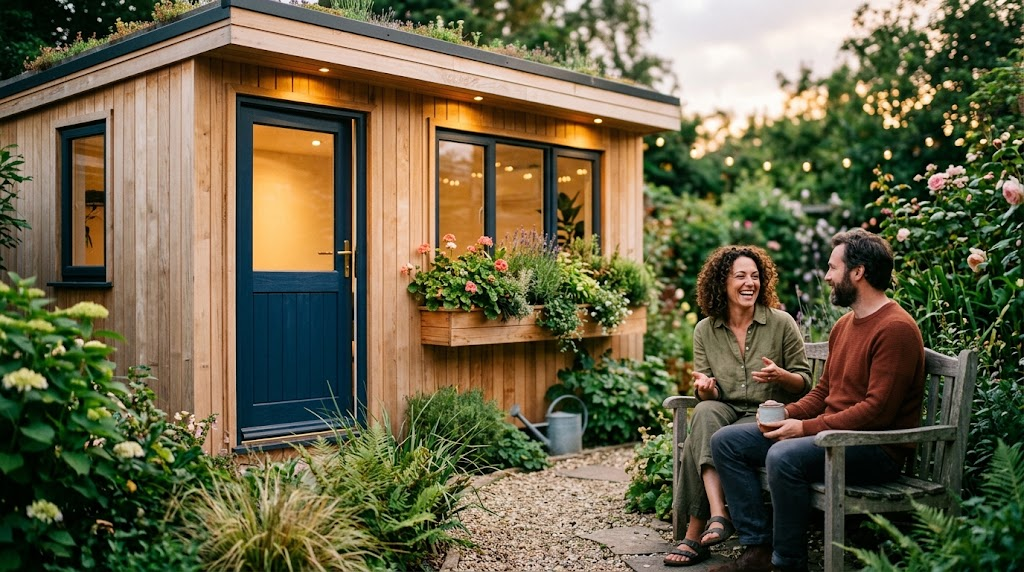
A little cottage in the back garden. A kitchen, a bed, a door that locks. Maybe your mom lives there, maybe a grad student you've never met does, maybe it just sits empty for most of the year until your brother needs a place for a month. An ADU — accessory dwelling unit — is one of the few moves in real estate that actually changes how your house feels to live in. The street looks the same, the mortgage statement looks the same, and suddenly there's another human-shaped reason to fix the fence.

The catch is the number. Building one in the US typically runs around $130,000, and that's before the surprise costs that show up after the contractor walks away. The plan below is about getting the build done without raiding your emergency fund, and without pretending the money isn't real.

The 18-month window is a deadline, not free money. If there's still a balance on the card when month 19 hits, interest starts accruing on the whole original amount at the card's standard rate, and it back-dates to day one for most issuers' promo terms — read your cardmember agreement before you open the account. Set a calendar reminder for month 16 with the payoff number on it, and have the plan to pay it off from cash, a refi, or a HELOC lined up before you swipe.

The steps

  1. 01

    Get three real bids, not one friendly estimate

    Late winter is when good contractors have gaps in their schedule, which is exactly when you want them. Get three written bids that break out site work, foundation, utilities tie-in, and finishes. The cheapest bid is rarely the one you want. Ask each builder for two addresses in your city where they built something similar in the last 18 months, and drive past one.

  2. 02

    Confirm what your lot will actually allow

    Setbacks, easements, sewer capacity, and your city's ADU ordinance decide what you can build long before a shovel hits dirt. Pull your parcel map from the county, and email your planning department a sketch with dimensions before you sign anything. A permit that takes 90 days is a 90-day delay on the entire budget.

  3. 03

    Add 15% to whatever you think it will cost

    The $130,000 figure assumes nothing goes wrong. Something always goes wrong — a buried stump, a sewer line that needs replacing, a panel upgrade for the new meter. Set aside 15% as a contingency before you start, and keep it in a separate account. Closing costs on any construction loan or refi, plus permits and impact fees, can easily add another 5 to 10%.

  4. 04

    Put the build on a 0% intro window

    The Citi Simplicity® Card is running 0% for 18 months on purchases from the date you open the account. If you put $130,000 on it and split it across the full 18 months, that's $7,222.22 a month. You still owe the full $130,000 at the end — this is a timing tool, not a discount. The win is keeping your cash invested or in reserve while the build runs, instead of writing eight-figure checks to a contractor.

  5. 05

    Check the rent like a grown-up

    Before you build, pull three comps of similar backyard units in your zip code on the listing sites, and call the landlords. Don't assume the rent pays the build. In most US cities it doesn't, not for years. Run the numbers assuming the unit sits empty two months a year and you'll still need a property manager. If the math works with those assumptions, the build is a real investment. If it only works with full occupancy and 5% annual rent growth, it's a hobby.

  6. 06

    Check the card terms before you commit

    Every figure we publish for the Citi Simplicity® Credit Card carries the date a person verified it against Citi and a link to where they checked. Intro windows and APRs change without notice, so confirm the current terms before applying.

    See Citi Simplicity® Credit Card terms →

Common questions

Is building an ADU a good way to make money?

Sometimes. In tight rental markets with high ADU-friendly ordinances, a backyard unit can cash-flow from month one. In most US suburbs it doesn't, at least not for years — the rent covers the mortgage and upkeep, and the real return comes when you sell the house. Treat any 'income' projection as a guess until you've checked three local comps.

Can I put a $130,000 charge on a credit card?

Most cards have credit limits well below that. You're unlikely to get a $130,000 limit on the Citi Simplicity® Card unless you have a strong existing relationship with Citi and significant income. Many builders also won't accept a credit card for a job that size without a surcharge. Talk to your contractor about a wire, then use the card for materials and fixtures where it accepts plastic.

What happens if I can't pay off the card before the intro window ends?

You'll owe interest on the remaining balance at the card's standard APR, often 25% or higher, which on the leftover balance adds up fast. Some cards also reserve the right to back-charge interest to day one on any unpaid promo balance. The honest move is to set the payoff date 60 days before the deadline and stick to it.

Do I need a permit to build an ADU?

Yes, in nearly every US city. Unpermitted ADUs are a serious problem when you sell, refinance, or file an insurance claim — buyers and lenders increasingly flag them. Permit timelines range from a few weeks to several months depending on your city, so start the conversation with your planning department before you commit to a builder.