0% for 15 billing cycles on purchases, and to… Bank of America® Customized Cash Rewards Credit Card for Students Calculators How we make money
VOATLAS
How to Budget for a Custom Built-In Pantry Shelving System

How to · Home

How to Budget for a Custom Built-In Pantry Shelving System

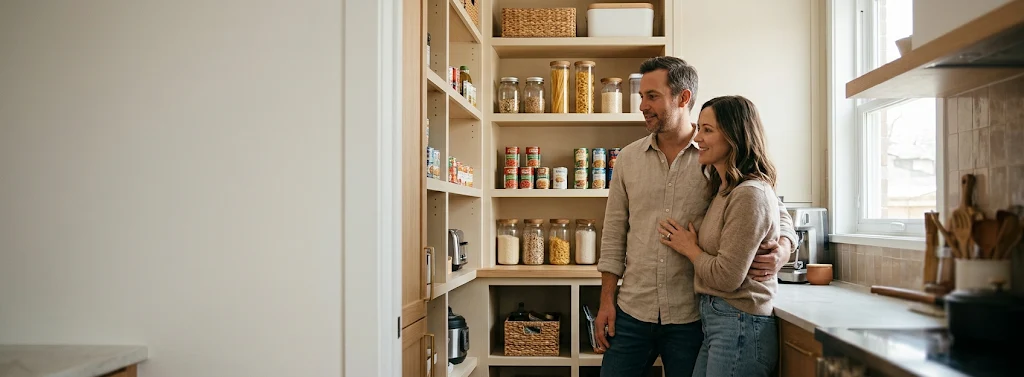
Clear out the chaos with a custom pantry built in January, when home organization sales make the math much easier.

Typical cost $1,500 before anything else
Across the 0% window $83.33/mo 18 months, no interest

How we got that: $1,500 spread evenly across the 18-month introductory window on the Citi Simplicity® Credit Card. Checked · at the bank Carry a balance past the window and the standard APR applies to what is left.

Opening your pantry shouldn't mean dodging falling canned goods or losing half your groceries in the dark. Once you put in a custom built-in shelving system, you actually see what you have, you stop rebuying stuff you already own, and cooking dinner gets a whole lot faster. The install itself usually takes just one to two days once the pieces are cut.

January is the absolute best time to book this project. Home organization companies run major promotions right after the new year to capture all those resolution resolutions, meaning you can often shave a chunk off the typical $1500 price tag. Before you put down a deposit, get at least three quotes from local carpenters or closet companies so you know you aren't overpaying.

That 18-month window is a hard deadline, not free money, and any leftover balance when it ends will trigger standard interest charges on whatever you still owe.

The steps

  1. 01

    Get multiple quotes

    Call at least three local cabinet makers or closet companies for estimates. January is prime time for storage promos, so ask every single one if they have a winter discount running.

  2. 02

    Finalize your design

    Measure the exact height of your cereal boxes and appliances so you don't end up with wasted shelf space. Pull-out drawers for heavy pots and vertical slots for baking sheets are worth every penny.

  3. 03

    Map out the financing

    If you want to spread out the cost of the $1500 system, you can use the Citi Simplicity® Credit Card, which gives you 0% for 18 months on purchases and balance transfers from date of account opening. That breaks down to about $83.33 per month if you want it paid off before the window closes.

  4. 04

    Clear the space

    Box up all your food a few days before the installers arrive. Store it temporarily on a folding table or in the dining room so the crew has a totally empty closet to work in.

  5. 05

    Inspect the work

    Check that every shelf is level and the vertical uprights are securely screwed into the wall studs. Make sure the drawers slide smoothly before you let the crew leave your house.

  6. 06

    Check the card terms before you commit

    Every figure we publish for the Citi Simplicity® Credit Card carries the date a person verified it against Citi and a link to where they checked. Intro windows and APRs change without notice, so confirm the current terms before applying.

    See Citi Simplicity® Credit Card terms →

Common questions

How long does a custom pantry installation take?

The actual physical install usually takes just one day, maybe two if it's a massive walk-in. The wait time is in the manufacturing, which can take anywhere from two to four weeks after you approve the design.

Are custom built-ins better than wire shelving?

Wire shelves sag under the weight of heavy cans and let small items tip over constantly. Wood or MDF built-ins hold more weight, look cleaner, and let you adjust shelf heights precisely.

Do I need to patch the walls before they install?

Usually no. The installers will be screwing right into the studs and covering most of the back wall anyway. Save your spackle for any major gouges left outside the footprint of the new pantry.

What is the best material for pantry shelves?

Melamine or finished MDF is the industry standard because it wipes clean easily when sticky syrup spills happen. Solid wood is nice, but it costs a lot more and can warp in humid spaces.