0% for 15 billing cycles on purchases, and to… Bank of America® Customized Cash Rewards Credit Card for Students Calculators How we make money
VOATLAS
How to Budget for a Custom Hardwood Cutting Board

How to · Home

How to Budget for a Custom Hardwood Cutting Board

A permanent prep station transforms daily cooking, and timing holiday sales lets you fund a $350 build without paying interest.

Typical cost $350 before anything else
Across the 0% window $23.33/mo 15 months, no interest

How we got that: $350 spread evenly across the 15-month introductory window on the Discover it® Cash Back. Checked · at the bank Carry a balance past the window and the standard APR applies to what is left.

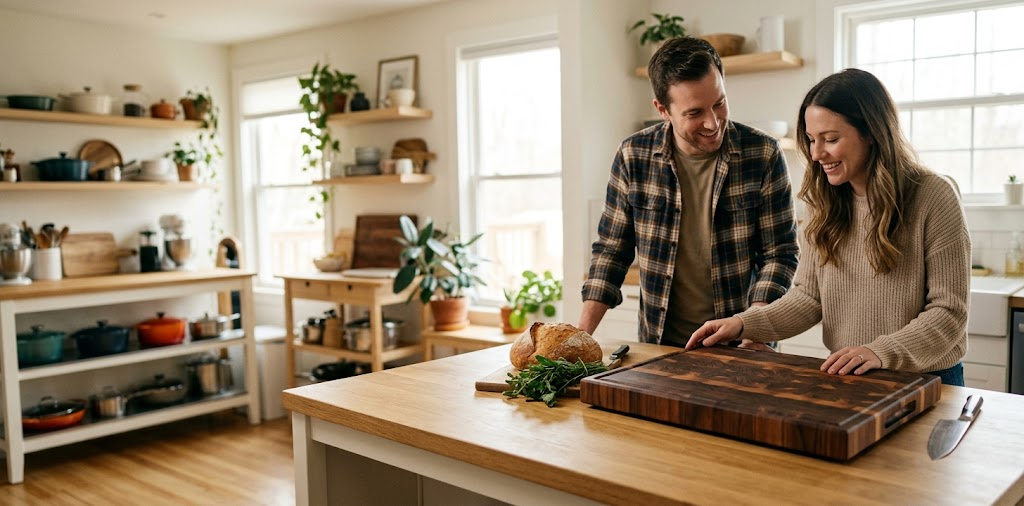
A dedicated hardwood cutting station changes kitchen workflow immediately. You stop juggling tiny plastic boards, knife edges stay sharp on end-grain wood, and scrap cleanup takes seconds. A custom build usually takes two to four weeks from order to delivery. The best time to buy is during major holiday weekend sales like Memorial Day, Labor Day, or Black Friday, when independent makers offer direct price cuts and free shipping.

Do not just buy from the first maker you see on social media. Measure your available counter space carefully, decide what features you need, and ask at least three woodworkers for quotes. For a solid 2-inch-thick station made from maple or walnut, expect to pay around $350.

The 15-month intro window is a firm deadline, not free money. If you have any balance left after 15 months, the standard APR kicks in on what remains, which quickly erases any savings you got from shopping holiday sales. Set your autopay for $23.33 immediately so the card hits zero well before the deadline.

The steps

  1. 01

    Map your counter footprint

    Measure the exact width and depth where the board will sit full-time. Decide if you want an end-grain block to protect knife edges or an edge-grain slab to keep costs slightly lower. List out features like a perimeter juice groove, side handholds, or recessed rubber feet before asking for prices.

  2. 02

    Collect three custom bids

    Send your dimensions and wood preferences to at least three local woodworkers or custom shops. Keep your request identical across all three so you can compare pricing fairly. Domestic hardwoods like maple, cherry, and walnut are durable and cost less than imported exotics.

  3. 03

    Order during holiday weekend sales

    Independent wood shops and kitchen supply makers often run discounts around Memorial Day, Labor Day, and late November. A heavy hardwood board costs serious money to ship across the country. Catching a holiday sale usually saves you 10% to 20% or covers the freight entirely.

  4. 04

    Spread the cost across 15 months

    Put the purchase on a Discover it® Cash Back card. You get a 0% intro APR for 15 months on purchases and balance transfers. If your custom board costs $350, paying $23.33 per month clears the balance right on schedule before interest starts.

  5. 05

    Season the wood before use

    Once the board arrives, do not start chopping immediately. Give it a heavy coat of food-grade mineral oil, let it soak in overnight, and buff off any excess. Applying oil or board conditioner once a month keeps the wood from drying out and cracking.

  6. 06

    Check the card terms before you commit

    Every figure we publish for the Discover it® Cash Back carries the date a person verified it against Discover and a link to where they checked. Intro windows and APRs change without notice, so confirm the current terms before applying.

    See Discover it® Cash Back terms →

Common questions

Which wood species is best for a heavy cutting station?

Hard maple, black walnut, and cherry are the best choices. Maple is the hardest and most resilient, walnut hides knife marks well, and cherry looks great with age. Avoid open-grain woods like oak, which trap moisture and bacteria.

Why are custom cutting boards priced around $350?

You are paying for kiln-dried hardwoods, waterproof food-safe glues, and hours of planing, sanding, and beveling. End-grain boards require cutting timber into dozens of small blocks and gluing them vertically. With basic care, that $350 board will last decades.

Do I need rubber feet on the bottom?

Yes, especially if the board stays on your counter permanently. Rubber feet allow air to circulate underneath so trapped water doesn't warp or mold the wood. They also keep the heavy board from sliding while you work.

What happens if I miss a monthly payment on the card?

Missing a payment can trigger late fees and may cause you to lose your promotional 0% intro APR entirely. Set an automatic monthly payment from your checking account as soon as the card arrives so you never miss a date.