0% intro APR for 15 months from account openi… Chase Freedom Unlimited® Credit Card Calculators How we make money
VOATLAS
How to Budget for Whole-House Smart Lights

How to · Home

How to Budget for Whole-House Smart Lights

Outfit every room with connected lighting for about $450, timed around bundle sales and split across 15 months.

Typical cost $450 before anything else
Across the 0% window $30.00/mo 15 months, no interest

How we got that: $450 spread evenly across the 15-month introductory window on the Discover it® Cash Back. Checked · at the bank Carry a balance past the window and the standard APR applies to what is left.

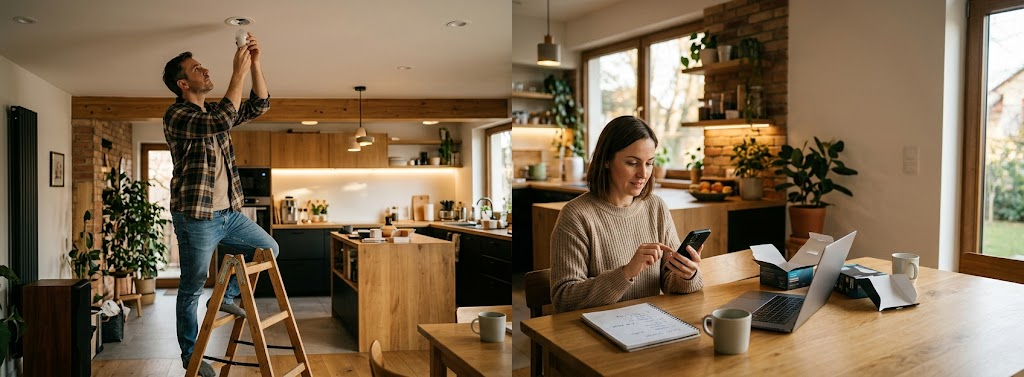
You walk in with armloads of groceries, and the hallway lights turn on by themselves. At bedtime, one tap shuts down the entire downstairs so you never walk back to check a switch. Swapping out every bulb in an average home takes an afternoon, but buying individual bulbs at the hardware store adds up fast. Compare bundle quotes from two or three major retailers during major holiday sales events to get the best pricing per socket.

Doing the whole house at once usually runs about $450. If you do not want that cash leaving your checking account on a single Tuesday, you can spread the cost out cleanly without paying interest.

A 0% intro rate is a timer, not free cash. Once the 15 months end, the standard variable APR hits whatever balance is left over. Set up an automatic payment of $30.00 each month from day one so the balance is gone before the promotional window closes.

The steps

  1. 01

    Map your sockets

    Walk through every room with a notepad. Count standard A19 bulbs, recessed BR30 cans, and small candelabra fixtures. Separating your count into living spaces and secondary areas lets you decide where you need color and where plain tunable white bulbs work fine.

  2. 02

    Buy multi-packs on sale

    Single smart bulbs are expensive. Multi-packs of four to eight bulbs offer the steepest discounts, especially during spring home improvement sales or Black Friday. Check at least two online retailers to see who is running the best bundle discount before placing an order.

  3. 03

    Put it on a 0% intro APR card

    Pay for the $450 order with the Discover it® Cash Back. It gives you 0% intro APR for 15 months on purchases and balance transfers. That breaks the total down to $30.00 per month across the 15-month intro window.

  4. 04

    Set up a hub and label fixtures

    Install the bulbs room by room, starting closest to your router or bridge. Name each bulb clearly in the app right away. If you name three different lamps 'Living Room Light,' you will hate troubleshooting it later.

  5. 05

    Program your core automations

    Start with two simple routines: a sunset trigger for living spaces and an auto-off schedule at midnight. Keeping your initial automations simple prevents the frustration of lights turning off while you are still reading in the room.

  6. 06

    Check the card terms before you commit

    Every figure we publish for the Discover it® Cash Back carries the date a person verified it against Discover and a link to where they checked. Intro windows and APRs change without notice, so confirm the current terms before applying.

    See Discover it® Cash Back terms →

Common questions

Do smart bulbs save money on electricity?

They use efficient LED technology, but the real savings come from automations. Scheduling bulbs to turn off when rooms are empty stops energy waste, though the convenience is usually the bigger benefit.

Do I need an electrician to install smart bulbs?

No. They screw directly into standard light sockets just like traditional bulbs. You only need an electrician if you decide to replace the physical wall switches instead of the bulbs themselves.

What happens if my internet goes down?

Your standard wall switches will still turn the bulbs on and off manually. You only lose remote phone access, voice controls, and automated schedules until your network comes back online.

Can I mix different smart bulb brands in the same house?

You can, but it is easier to stick to one brand ecosystem or use a universal smart home platform like Apple Home, Google Home, or Amazon Alexa to manage them all in one place.