0% for 15 billing cycles on purchases, and to… Bank of America® Customized Cash Rewards Credit Card for Students Calculators How we make money
VOATLAS
How to Pay for a Car Battery and Alternator Test

How to · Auto

How to Pay for a Car Battery and Alternator Test

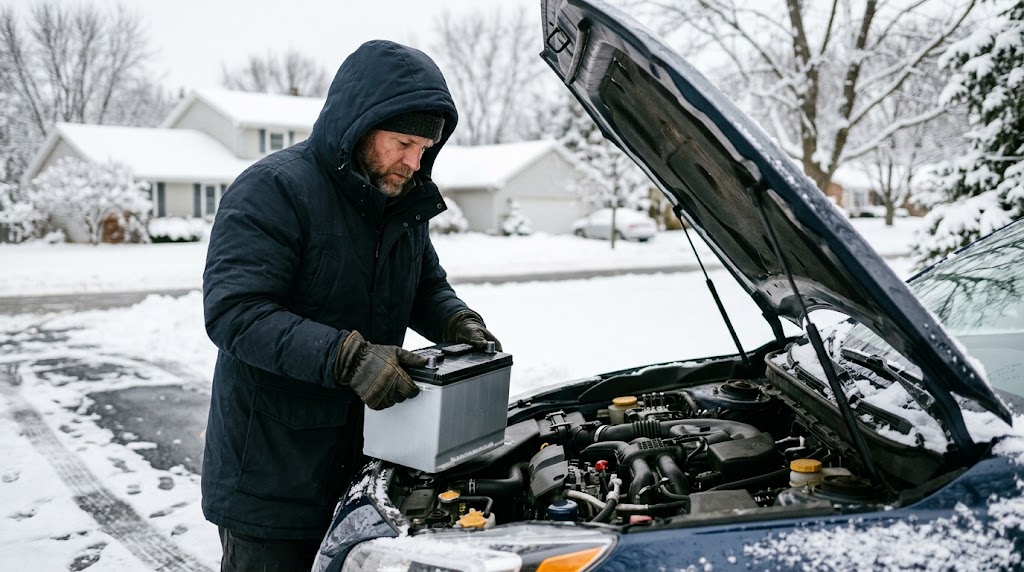
Skip the stress of winter breakdowns by testing your alternator and replacing your car battery before the first cold snap hits.

Typical cost $250 before anything else
Across the 0% window $16.67/mo 15 months, no interest

How we got that: $250 spread evenly across the 15-month introductory window on the Discover it® Cash Back. Checked · at the bank Carry a balance past the window and the standard APR applies to what is left.

Owning a car is mostly fine until the temperature drops and the engine won't turn over. Neglecting your electrical system gets expensive fast, especially if you end up needing a tow in the middle of winter. Fall is the best time to check these parts because shops aren't slammed yet and the cold weather hasn't ruined your battery.

A standard battery and an alternator test will run you about $250. While you can negotiate the labor rate or shop around for parts, financing the fix lets you keep your cash. Using the Discover it® Cash Back card gives you time to pay it off slowly.

Remember that a 0% interest window is not free money. If you do not pay off the full $250 balance within the 15 months, the standard variable interest rate will kick in on whatever is left, making your cheap battery replacement a lot more expensive.

The steps

  1. 01

    Test before you buy

    Don't just buy a battery because your car won't start. A bad alternator will ruin a brand-new battery in days. Ask a local shop to test the alternator first, which usually costs under $50 or is sometimes free at auto parts stores.

  2. 02

    Shop the battery brands

    You do not need to buy the most expensive battery at the dealership. Look for reputable brands at big-box stores or local auto parts shops. Compare the cold cranking amps, which measure how well the battery starts in freezing weather.

  3. 03

    Spread out the cost

    Use the Discover it® Cash Back to handle the $250 bill. The card offers 0% intro APR for 15 months on purchases and balance transfers. If you split the cost over that window, you only need to pay $16.67 per month to clear the debt.

  4. 04

    Ask for a parts discount

    Mechanics often mark up the price of the battery they install. Ask if they will let you bring your own battery that you bought online or at a retail store. If they say no, ask them to match the retail price of the part.

  5. 05

    Clean the terminals

    Sometimes a dying battery just has dirty connections. Before you pay for a replacement, check the metal terminals for white or green crust. Cleaning them with a wire brush and some baking soda might save you a trip to the shop.

  6. 06

    Check the card terms before you commit

    Every figure we publish for the Discover it® Cash Back carries the date a person verified it against Discover and a link to where they checked. Intro windows and APRs change without notice, so confirm the current terms before applying.

    See Discover it® Cash Back terms →

Common questions

How do I know if it is the battery or the alternator?

If your car starts with a jump but dies immediately after you remove the jumper cables, your alternator is likely bad. If it runs fine after a jump but won't restart on its own later, the battery is the culprit.

Can I replace a car battery myself?

Yes, it is one of the easiest DIY car repairs. You only need a basic wrench set and some gloves, though you must be careful to disconnect the negative cable first and reconnect it last.

Does cold weather actually ruin batteries?

Cold temperatures slow down the chemical reactions inside your battery, cutting its starting power. If your battery is already weak, the first hard freeze of winter will usually finish it off.

What is a normal lifespan for a car battery?

Most car batteries last between three and five years. If yours is older than four years and you live in a place with cold winters, it is smart to get it tested every fall.