0% intro APR for 15 months from account openi… Chase Freedom Flex ® Credit Card Calculators How we make money
VOATLAS
How to Afford a $520K Coast Second Home This Autumn

How to · Property

How to Afford a $520K Coast Second Home This Autumn

A practical plan for buying a $520,000 coastal second home in late autumn using a 15-month 0% intro APR window.

Typical price $520,000 before closing costs
Deposit at 5% $26,000 what you need saved

How we got that: 5% of $520,000. Plenty of loans go lower — 3% on a conventional, 3.5% on an FHA, nothing down on a VA — and plenty of buyers put more in to shrink the monthly payment. Closing costs land on top, usually another 2–5%. Your actual rate and payment depend on the lender, your credit and the day you lock.

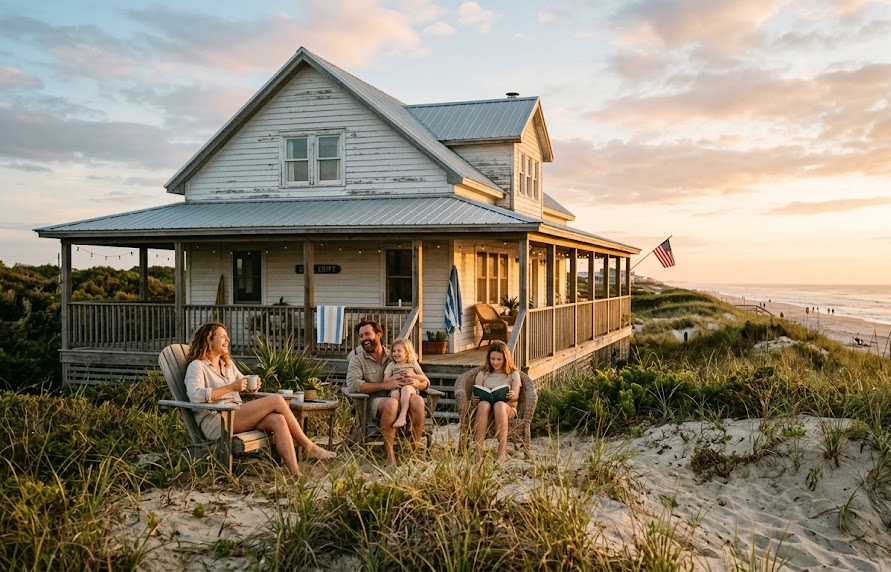
Picture a side street two blocks from the beach in early November. The tourists have gone, the ice cream shops are boarded up, and the listing photos show empty rooms with wide-plank floors and a kitchen that opens onto a small deck. This is the season when coastal sellers get quieter and prices stop reaching for the summer peak. A second home here works for someone who actually wants to use it four or five times a year, not rent it out full time. It is not an investment you can pencil out on a napkin.

Before you fall for the porch, do the math on the whole purchase: the down payment you have ready, the closing costs, the monthly payment once everything is layered in, and the carrying cost for the months you are not there. We will walk through the realistic numbers and where a 15-month 0% intro APR on purchases can buy you time, and where it cannot.

The 15-month 0% intro APR is a deadline, not a discount. Whatever balance is still on the card at the end of month 15 starts earning the regular purchase APR, and that rate is high enough to undo any savings from the intro window. Treat the runway as 15 months to get the balance to zero through a mix of cash, rental income you have verified locally, or a refinancing plan you have already lined up.

The steps

  1. 01

    Picture the house, then price the house

    Write down what the place has to be: walkable to sand, parking for two cars, a bedroom on the ground floor for an aging parent, whatever actually matters to you. Then look at recent sales, not just active listings, in the specific town. A $520,000 figure is a starting point; the real number for the specific street may be lower in late autumn because demand has cooled. Check the property tax rate and any HOA fee for the exact address, because those are the two numbers that quietly double your monthly carry.

  2. 02

    Get the full monthly payment on paper

    Take the $520,000 and assume you put down 20%, which is $104,000, and you borrow about $416,000 on a 30-year fixed. Get an actual quote from a lender you name, not a guess. Then add property tax, homeowners insurance, and if it is on the coast, separate wind or flood insurance, because standard homeowners policies often do not cover storm surge. The number that comes out is the number you have to be ready to pay every month for the next 30 years, with or without a tenant.

  3. 03

    Plan the closing costs separately

    Closing on a second home usually runs 2% to 5% of the price, so budget roughly $10,000 to $26,000 on top of the down payment. That covers the lender fees, title work, appraisal, and any prepaid escrow items. Late autumn can be useful here because some of these fees are negotiable and sellers in a slow market are more willing to offer a credit at closing. Do not let the 0% intro APR tempt you into rolling closing costs onto the card and forgetting they exist.

  4. 04

    Use the Discover it card for a 15-month runway on the furniture and fix-ups

    If you put renovations, furnishings, or even the closing costs you cannot cover in cash on the Discover it Cash Back card, you get 0% intro APR for 15 months on purchases. At $520,000 spread across 15 months that is $34,666.67 a month, but you would not actually charge that much, you would charge what the furnishings and small repairs genuinely cost. The point is the runway: 15 months of no interest while you settle in, rent it out seasonally if local rules allow, and build the cash to pay it off before the window closes. Discover it also pays 5% cash back in rotating categories on up to a quarterly cap, so check the current quarter before you swipe the big-ticket items.

  5. 05

    Stress test the months after month 15

    Mark month 15 on a calendar today. Whatever balance is still on the card at that point starts accruing the regular purchase APR, which can be high. The honest version of this plan is that the 0% window buys you time, not a free house. You either pay the card down to zero by month 15 from rental income plus your own cash, or you refinance the balance into a personal loan with a real rate you have shopped for. Walk away from the plan if the rental income numbers in your town cannot be verified with actual listings, because hope is not a payment strategy.

  6. 06

    Check the card terms before you commit

    Every figure we publish for the Discover it® Cash Back carries the date a person verified it against Discover and a link to where they checked. Intro windows and APRs change without notice, so confirm the current terms before applying.

    See Discover it® Cash Back terms →

Common questions

Should I put the down payment on a 0% intro APR card?

No. Lenders want to see the down payment come from your own funds, and a card issuer will not let you draw a $100,000 cash advance at 0%. The card is for furnishings, minor renovations, and possibly some closing costs, not for the actual down payment.

Can I rent out the second home to cover the card payments?

Possibly, but you have to check the specific town. Many coastal municipalities cap the number of rental days per year, require local registration, or restrict short-term rentals entirely. Look up the actual ordinance and pull three current Airbnb or Vrbo listings for comparable homes before you count on a single dollar of rent.

What credit score do I need to qualify for a second home mortgage?

Lenders treat a second home mortgage like a primary home but with stricter numbers: a credit score in the mid-700s or higher, lower debt-to-income ratio, and more cash reserves. Expect a slightly higher rate than on your primary mortgage, and do not assume the rate you saw last week is still available when you make an offer.

Is late autumn really cheaper for coastal second homes?

Usually, but not always. Inventory shrinks in winter, so there are fewer listings, and the ones that remain tend to be either priced firmly or stale. The real leverage is that motivated sellers with homes that did not move in summer are more willing to negotiate credits at closing or accept an offer with fewer contingencies.