0% for 18 months on purchases and balance tra… Citi Simplicity® Credit Card Calculators How we make money
VOATLAS
How to Budget for a Motorized Patio Awning

How to · Home

How to Budget for a Motorized Patio Awning

A motorized patio awning costs about $2,100. Here is how to plan the project in late winter and pay it off with zero interest.

Typical cost $2,100 before anything else
Across the 0% window $140.00/mo 15 months, no interest

How we got that: $2,100 spread evenly across the 15-month introductory window on the Discover it® Cash Back. Checked · at the bank Carry a balance past the window and the standard APR applies to what is left.

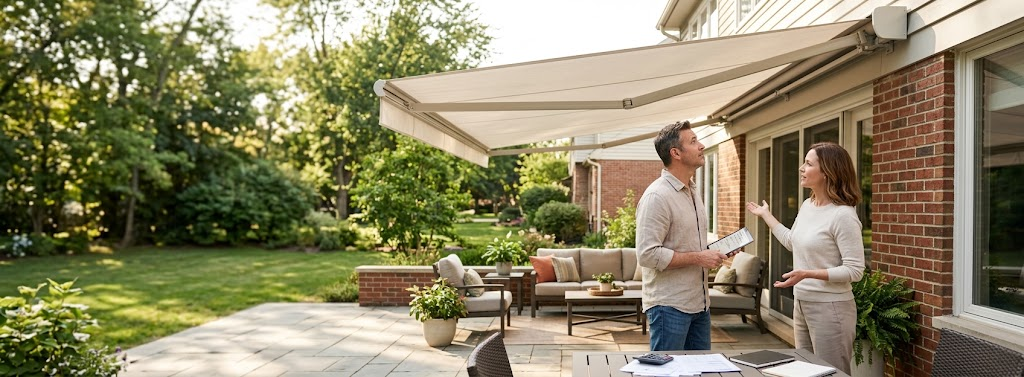
A scorching patio can make your outdoor space unusable for months. Adding a motorized retractable awning gives you instant shade at the touch of a button, keeps the adjoining room inside cooler, and usually takes an installer less than half a day to mount and wire. The trick is timing: late winter is when contractors have thin schedules and are far more willing to negotiate before the spring rush hits.

A quality setup typically runs around $2,100 installed. You do not want to wipe out your cash reserves just to sit outside comfortably, but you also do not want high interest eating into your budget. Spreading the purchase across a zero-interest window gives you the shade now without the added finance fees.

Keep in mind that an introductory rate is a strict deadline, not free money. If you still have a balance when the 15 months end, the regular interest rate kicks in on whatever is left, which quickly undoes your savings. Stick to the $140.00 monthly target and finish the balance early.

The steps

  1. 01

    Measure your mounting surface

    Check the exterior wall where the unit will hang. You need clear horizontal space and enough vertical clearance above the door or window frame, typically at least eight feet from the deck floor. Note whether you are mounting into brick, siding, or concrete, as that dictates the bracket hardware.

  2. 02

    Collect three contractor quotes

    Never sign with the first installer who walks your yard. Contact at least three local pros in late winter while business is quiet. Ask each to itemize the hardware, labor, and electrical hookup so you can compare the real price of the job.

  3. 03

    Schedule the build for late winter

    Book the installation day before the weather warms up. Contractors often discount their labor rate or throw in an accessory like a wind sensor to keep their crews working during the off-season lull. You also skip the multi-week spring backlog.

  4. 04

    Use a 15-month intro window

    Put the $2,100 balance on the Discover it® Cash Back, which offers a 0% intro APR for 15 months on purchases and balance transfers. Paying $140.00 per month clears the entire project within the introductory window without paying a dime in interest.

  5. 05

    Automate your monthly payments

    Set up an automatic monthly payment of $140.00 right after the charge posts. Treating the monthly amount like a non-negotiable utility bill ensures you do not miss a due date or let the balance linger into standard rates.

  6. 06

    Check the card terms before you commit

    Every figure we publish for the Discover it® Cash Back carries the date a person verified it against Discover and a link to where they checked. Intro windows and APRs change without notice, so confirm the current terms before applying.

    See Discover it® Cash Back terms →

Common questions

Is a motorized awning worth the extra cost over manual?

Yes, because you will actually use it. Hand-cranking a large awning takes effort and time, so manual awnings tend to stay closed. A motor extends and retracts the fabric in seconds from a wall switch or remote.

Can I install a motorized awning myself to save money?

You can, but these units weigh well over 100 pounds and need structural anchoring into wall studs or headers. If you do not have electrical experience and a couple of friends to help lift it safely, professional installation is worth the fee.

What electrical hookup is required?

Most residential units run on a standard 110-volt outdoor GFCI outlet. If you do not have an exterior outlet within reach of the power cord, factor in an extra fee for an electrician to add one.

How do you protect the awning during high winds?

Retract the awning whenever winds pick up or if you leave home. Many motorized units support an automatic wind sensor that reels the fabric in when it detects heavy movement, which prevents broken arms and torn fabric.