0% for 12 months on purchases and 0% for 21 m… Citi® Diamond Preferred® Credit Card Calculators How we make money
VOATLAS
How to Budget for an Attic Insulation Upgrade

How to · Home

How to Budget for an Attic Insulation Upgrade

Keep your house warm and your bills down with a smart plan for your attic insulation upgrade.

Typical cost $2,500 before anything else
Across the 0% window $138.89/mo 18 months, no interest

How we got that: $2,500 spread evenly across the 18-month introductory window on the Citi Simplicity® Credit Card. Checked · at the bank Carry a balance past the window and the standard APR applies to what is left.

Your upstairs rooms stop roasting in the summer and freezing in the winter once you get the attic sealed and insulated right. The actual installation usually takes just one or two days, and if you book during the off-peak season for contractors, you will often find better crew availability and lower labor rates. Timing it right makes a noticeable dent in the total bill.

You want to get at least three different quotes from local insulation contractors before you commit to any work. Prices and approaches vary wildly between companies, and having multiple estimates gives you leverage to negotiate. Once you pick the right crew, you can map out how to pay for the project without scrambling.

That intro window is a hard deadline, not free money, and any balance left over when it ends will start racking up standard interest charges fast.

The steps

  1. 01

    Get multiple quotes

    Call at least three local contractors to look at your attic and give you written estimates. Compare what kind of insulation they use and whether air sealing is included in the price.

  2. 02

    Schedule in the off-peak season

    Book the work during contractors' slower months, usually late winter or mid-summer, when demand drops. You might catch a better rate or get the job scheduled much faster.

  3. 03

    Spread out the cost

    You can use the Citi Simplicity® Credit Card, which gives you 0% for 18 months on purchases and balance transfers from date of account opening. Spreading the typical $2500 cost across that window comes out to $138.89 per month.

  4. 04

    Clear out the space

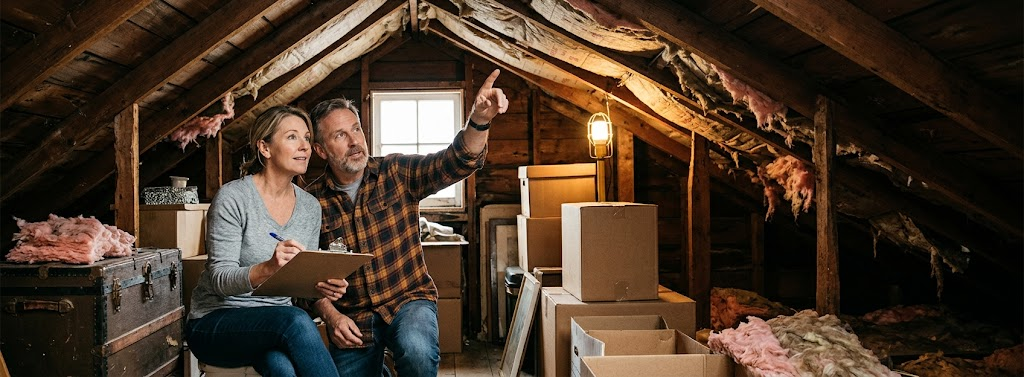
    Take everything out of your attic before the crew arrives so they can work quickly. Storing your stuff in the garage or spare room for a day saves the installers time and saves you labor fees.

  5. 05

    Inspect the finished work

    Go up into the attic with a flashlight after the crew finishes to check the depth markers and make sure every corner is covered. Do not sign off or pay the final balance until you are sure the job meets your quote.

  6. 06

    Check the card terms before you commit

    Every figure we publish for the Citi Simplicity® Credit Card carries the date a person verified it against Citi and a link to where they checked. Intro windows and APRs change without notice, so confirm the current terms before applying.

    See Citi Simplicity® Credit Card terms →

Common questions

How long does attic insulation last?

Good fiberglass or cellulose insulation can easily last twenty to thirty years without needing replacement. You just want to check it every few years to make sure it is not sagging or holding moisture from a roof leak.

Do I need to be home while they install it?

You should be there when the crew starts to walk them through the space and confirm the quote details. After that, you can usually leave as long as someone is available by phone if they run into an unexpected issue.

Will blown-in insulation make my house messy?

Installers run a giant hose from a truck outside directly into your attic, so very little dust gets inside your living space. They should also lay down drop cloths along the path from your front door to the attic hatch.

How do I know if my current insulation is bad?

If your upstairs rooms are always a different temperature than the downstairs, or if your energy bills spike every month, your current insulation is likely too thin or compressed. You can also climb up there with a tape measure to check if the depth falls below local building recommendations.