0% intro APR for 15 months on purchases and b… Quicksilver Rewards Calculators How we make money
VOATLAS
How to Buy a Portable Power Station

How to · Tech

How to Buy a Portable Power Station

A solid camping battery should run for a decade. Here is how to pick the right one and split a $900 setup into $60 monthly payments.

Typical cost $900 before anything else
Across the 0% window $60.00/mo 15 months, no interest

How we got that: $900 spread evenly across the 15-month introductory window on the Discover it® Cash Back. Checked · at the bank Carry a balance past the window and the standard APR applies to what is left.

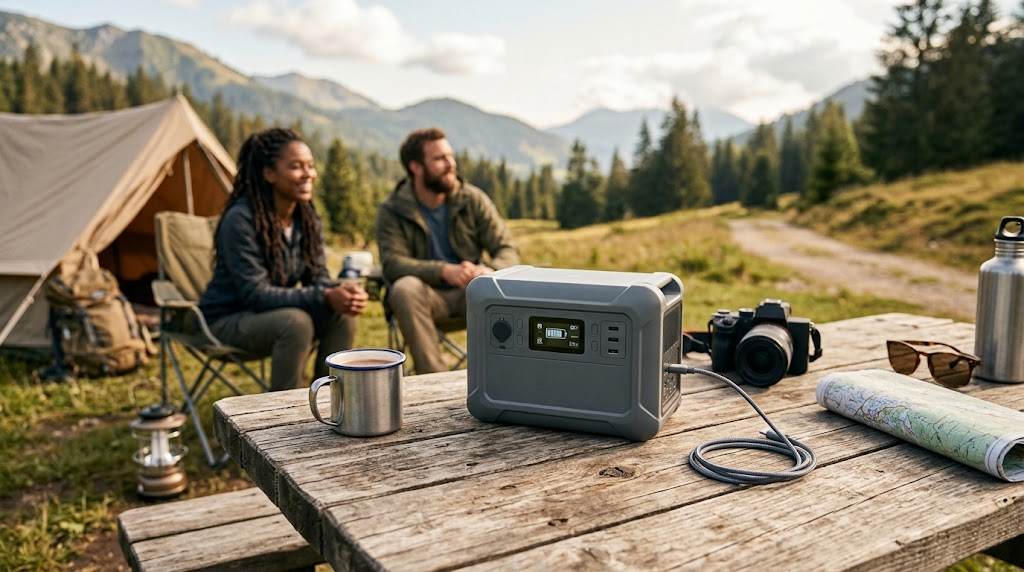
A decent portable power station turns off-grid camping into a smooth weekend instead of a battery-saving anxiety trip. You are buying this to run a 12-volt fridge, charge cameras, keep lights on, and handle a CPAP machine through freezing nights. If you choose a unit with LiFePO4 battery chemistry, it should easily last 10 years and thousands of cycles.

The trick is timing the gear cycle. Outdoor tech brands update their lineups right around late spring, which means older inventory sits discounted when temperatures drop. Picking up last year's model at the end of summer gets you 95% of the same features for hundreds of dollars less.

Keep in mind that zero percent interest is a hard deadline, not free money. If you have any balance left after 15 months, the standard APR kicks in on whatever remains. Set your auto-pay for $60.00 each month from the start so you cross the finish line with a zero balance.

The steps

  1. 01

    Size your actual daily wattage

    Figure out what you actually need to power before looking at spec sheets. Add up the running watts of your camp fridge, phone, and lights for a typical 24-hour stretch. A 1,000-watt-hour unit usually hits the sweet spot for a long weekend without hauling fifty pounds of dead weight.

  2. 02

    Wait for late-summer clearance

    Late August through September is when retailers clear camping inventory to make room for fall gear. Brands drop prices on their flagship battery stations right as camping season winds down. Look for certified refurbished units or older models that just lost their top-tier spot.

  3. 03

    Stick with LiFePO4 chemistry

    Skip older lithium-ion models even if they look cheap on paper. Lithium iron phosphate batteries handle roughly 3,000 to 3,500 charge cycles before dropping to 80% capacity, compared to just 500 cycles on standard lithium. It means buying one station instead of replacing a dead brick in four years.

  4. 04

    Finance at zero percent with Discover

    The Discover it® Cash Back gives you a 0% intro APR for 15 months on purchases and balance transfers. On a typical $900 unit, dividing that purchase evenly comes out to exactly $60.00 a month. Set an automatic monthly transfer so you clear the balance before the standard rate kicks in.

  5. 05

    Add a solar panel later

    Do not buy the bundled solar panel on day one unless it comes at a steep discount. You can charge the power station from your car's 12-volt port on the drive up or top it off at home before leaving. Buy panels next spring once you know how fast your setup actually drains in camp.

  6. 06

    Check the card terms before you commit

    Every figure we publish for the Discover it® Cash Back carries the date a person verified it against Discover and a link to where they checked. Intro windows and APRs change without notice, so confirm the current terms before applying.

    See Discover it® Cash Back terms →

Common questions

How big of a power station do I need for weekend camping?

A 500Wh to 1,000Wh station covers most weekend trips. It will run a 12V fridge for two days and charge your phones and headlamps multiple times. Anything over 1,500Wh gets heavy and hard to pack in a standard trunk.

Is last year's power station model good enough?

Yes, almost always. Battery tech evolves slowly, so annual updates usually just add faster app connectivity or a slightly brighter screen. The core cells and inverters are nearly identical, making previous-gen models the best value.

Can I leave a power station plugged in all the time at home?

Modern stations have internal battery management systems that stop charging once full, so keeping it plugged in as an emergency backup is safe. Just check the manual once to confirm it supports pass-through charging.

Can a 1,000W power station run a camp coffee maker or heater?

Heating elements pull massive wattage, often 1,200 to 1,800 watts, which can trip a 1,000W inverter. Stick to low-wattage travel appliances, or boil water on a camp stove and save the battery for refrigeration and lighting.