0% for 12 months on purchases and 0% for 21 m… Citi® Diamond Preferred® Credit Card Calculators How we make money
VOATLAS
How to Pay for a Standby Home Generator

How to · Home

How to Pay for a Standby Home Generator

A $6,500 install spread across 15 months, timed before storm season, with one card's intro window doing the heavy lifting.

Typical cost $6,500 before anything else
Across the 0% window $433.33/mo 15 months, no interest

How we got that: $6,500 spread evenly across the 15-month introductory window on the Discover it® Cash Back. Checked · at the bank Carry a balance past the window and the standard APR applies to what is left.

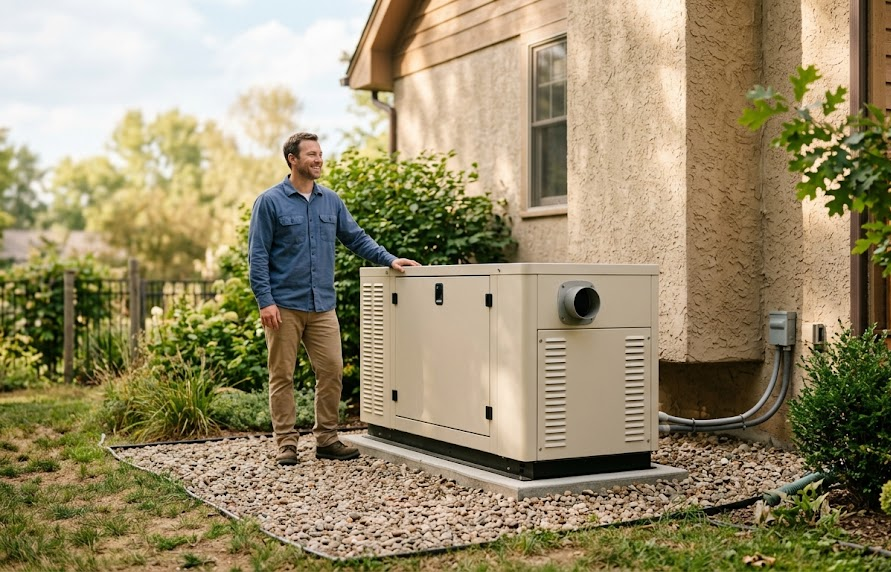
Picture the next storm rolling through. The lights flicker, the neighbors go dark, and your kitchen stays lit because the generator outside kicked on by itself. That is the daily payoff of a standby unit, and the install usually takes a crew one to two days once the model and gas line are sorted. Early spring, before the first big outage, is when installers are hungry and you can catch end-of-season discounts on last year's models.

Because the work is fast but the bill lands all at once, the timing of how you pay matters as much as the timing of the install. That is where a short-term intro APR on a credit card can keep cash flow steady while the unit earns its keep.

The intro APR is a deadline, not free money. If any of the $6,500 is still on the card after the 15-month window closes, that leftover starts accruing interest at the card's regular purchase rate, which can quickly outpace anything you saved on the install. Treat the monthly payment like a utility bill, automate it, and try to finish a month ahead.

The steps

  1. 01

    Get three written quotes

    Call at least three licensed installers and ask for a line-item quote covering the unit, the transfer switch, gas line work, permits, and electrical. Generators are not commodity items, so prices swing a lot between dealers. Three quotes is the fastest way to spot an outlier and to give yourself leverage when negotiating.

  2. 02

    Lock the install in early spring

    Book the work for early spring, a few weeks before storm season kicks in. Crews are less slammed than in late summer, and manufacturers often discount prior-year models once new inventory lands. Ask whether the installer can price-match or throw in a maintenance plan to bridge the gap.

  3. 03

    Plan the cash before the crew shows up

    Most installers want a deposit at booking and the balance on completion. Decide in advance how much of the $6,500 you want to pay from savings versus on a card. The split matters because the intro window only helps on the portion you actually charge, and any fee the installer adds for card payment eats into the savings.

  4. 04

    Charge the balance to the Discover it Card

    Put the financed portion on the Discover it Card to use the 0% intro APR for 15 months on purchases. The math is simple: $6,500 across 15 months works out to about $433.33 a month. Set up autopay for that monthly amount so you never miss the window, and pay it down faster if you can, because the 0% only applies to the 15-month intro period.

  5. 05

    Pay it off before month 16

    Mark month 15 on your calendar right now. Whatever balance is still on the card after that point starts accruing the regular purchase APR, which is the expensive part of any intro offer. Aim to be done a month early so a slow mail delivery or a scheduling slip cannot surprise you.

  6. 06

    Check the card terms before you commit

    Every figure we publish for the Discover it® Cash Back carries the date a person verified it against Discover and a link to where they checked. Intro windows and APRs change without notice, so confirm the current terms before applying.

    See Discover it® Cash Back terms →

Common questions

Will a standby generator really raise my home value?

It depends on the market and the buyer. In storm-prone regions, buyers often see a hardwired standby unit as a real perk, similar to a new roof. In milder climates, the resale lift is smaller. Either way, it is easier to live with than a portable unit that needs refueling in the rain.

Do I need a permit for a standby generator?

Almost always yes. Most cities and HOAs require an electrical and sometimes a gas permit, and the installer usually pulls them. Ask your three quoted installers who handles permitting in their quote, because a missing permit can delay the job and complicate a future home sale.

What size generator do I actually need?

Sizing is about the loads you want to run, not the square footage of the house. A typical 10 to 16 kW unit covers the fridge, internet, lights, and a few outlets. Whole-home coverage with central air usually means 20 kW or more. An installer will do a load calculation during the quote.

Can I finance the generator through the installer instead?

Often yes, and it is worth asking. Installer financing sometimes offers a similar 0% promo or a longer term, but it can also come with deferred interest, which is different from true 0% and can backfire if a payment is late. Compare the offer against putting the purchase on a 0% intro APR card and run the numbers either way.