0% for 18 months on purchases and balance tra… Citi Simplicity® Credit Card Calculators How we make money
VOATLAS
How to Budget for a Tankless Reverse Osmosis System

How to · Home

How to Budget for a Tankless Reverse Osmosis System

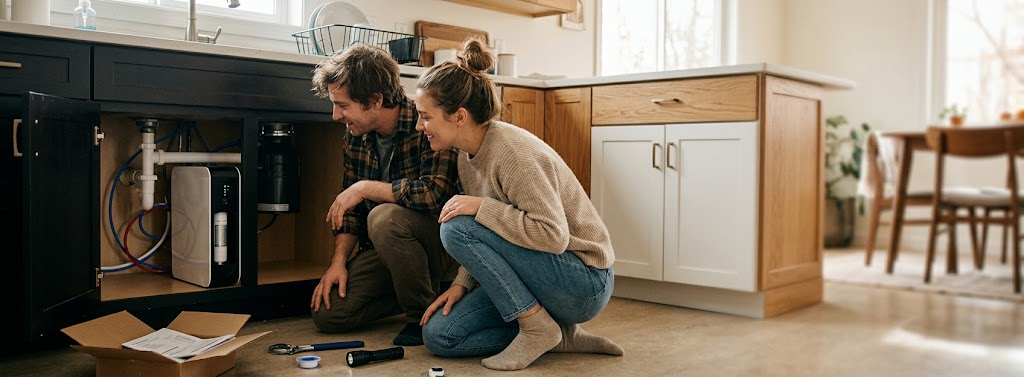
A tankless reverse osmosis filter costs about $350 and cuts out bulky pitchers, saving counter space and grocery runs.

Typical cost $350 before anything else
Across the 0% window $23.33/mo 15 months, no interest

How we got that: $350 spread evenly across the 15-month introductory window on the Discover it® Cash Back. Checked · at the bank Carry a balance past the window and the standard APR applies to what is left.

You reclaim your counter space and ditch the slow pitcher filter immediately. Pure, clean water runs straight from a dedicated tap, and you never have to haul heavy jugs from the supermarket again. Installing one takes about two hours on a Saturday, though you will want to watch for spring home improvement sales when prices drop the lowest.

If you plan on hiring a plumber rather than drilling your own countertop hole, call at least two local trades to get quotes before you buy the hardware. Factoring in roughly $350 for the unit itself, planning your payment properly keeps the upgrade painless.

Keep in mind that the 15-month intro window is a firm deadline, not free money. If you carry any balance past that window, regular interest kicks in on what is left, which quickly undoes the savings from your purchase.

The steps

  1. 01

    Inspect your cabinet and power

    Check under your sink before buying anything. A tankless unit needs a live electrical outlet for its internal pump and enough clearance around your drain pipes. Measure your cabinet depth and height so you do not end up returning a box that blocks your plumbing.

  2. 02

    Time the purchase for spring

    Retailers usually discount water filtration gear during spring home improvement events. You can easily find solid units around the $350 mark if you wait for these sales. Set a price tracker on a couple of reputable models and grab one once the promo starts.

  3. 03

    Line up two plumbing estimates

    Hire out if you are uncomfortable tapping into your cold water line or drilling through stone. Ask at least two local plumbers for a flat quote to hook up an under-sink system. Sending clear photos of your pipes and faucet holes usually gets you an estimate without a service call fee.

  4. 04

    Spread the cost across 15 months

    Put the $350 purchase on a Discover it® Cash Back card to get 0% intro APR for 15 months on purchases and balance transfers. Paying $23.33 per month clears the balance right on time without adding interest charges. That turns an upfront home upgrade into a small monthly line item.

  5. 05

    Stock your first replacement set

    Under-sink filters last between six months and two years depending on the stage. Order your first set of replacement cartridges right away so you have them ready when the indicator light beeps. Write the installation date on the cabinet wall next to the unit.

  6. 06

    Check the card terms before you commit

    Every figure we publish for the Discover it® Cash Back carries the date a person verified it against Discover and a link to where they checked. Intro windows and APRs change without notice, so confirm the current terms before applying.

    See Discover it® Cash Back terms →

Common questions

Can I install a tankless reverse osmosis system myself?

Most systems use push-connect fittings that work well for DIYers. If your sink already has a spare hole and there is an outlet underneath, the job takes about two hours. You only need a plumber if you must drill through granite or run fresh wiring.

How often do tankless reverse osmosis filters need replacement?

Pre-filters generally need changing once a year, while the main RO membrane lasts two to three years. Replacement costs range from $50 to $100 depending on the brand. Tankless units usually have an indicator light on the faucet to warn you when flow drops.

Do tankless systems waste a lot of water?

Modern tankless models are much more efficient than older systems with storage tanks. They typically run at a 1.5:1 or 2:1 pure-to-drain ratio, whereas older tanks often dumped four gallons down the drain for every gallon filtered. The change to your water bill is negligible.

What happens if I do not pay off the balance in 15 months?

Any balance remaining after the 15 months will start accruing interest at the card's standard ongoing rate. Setting up an automatic payment of $23.33 each month ensures you clear the $350 before the intro window closes.